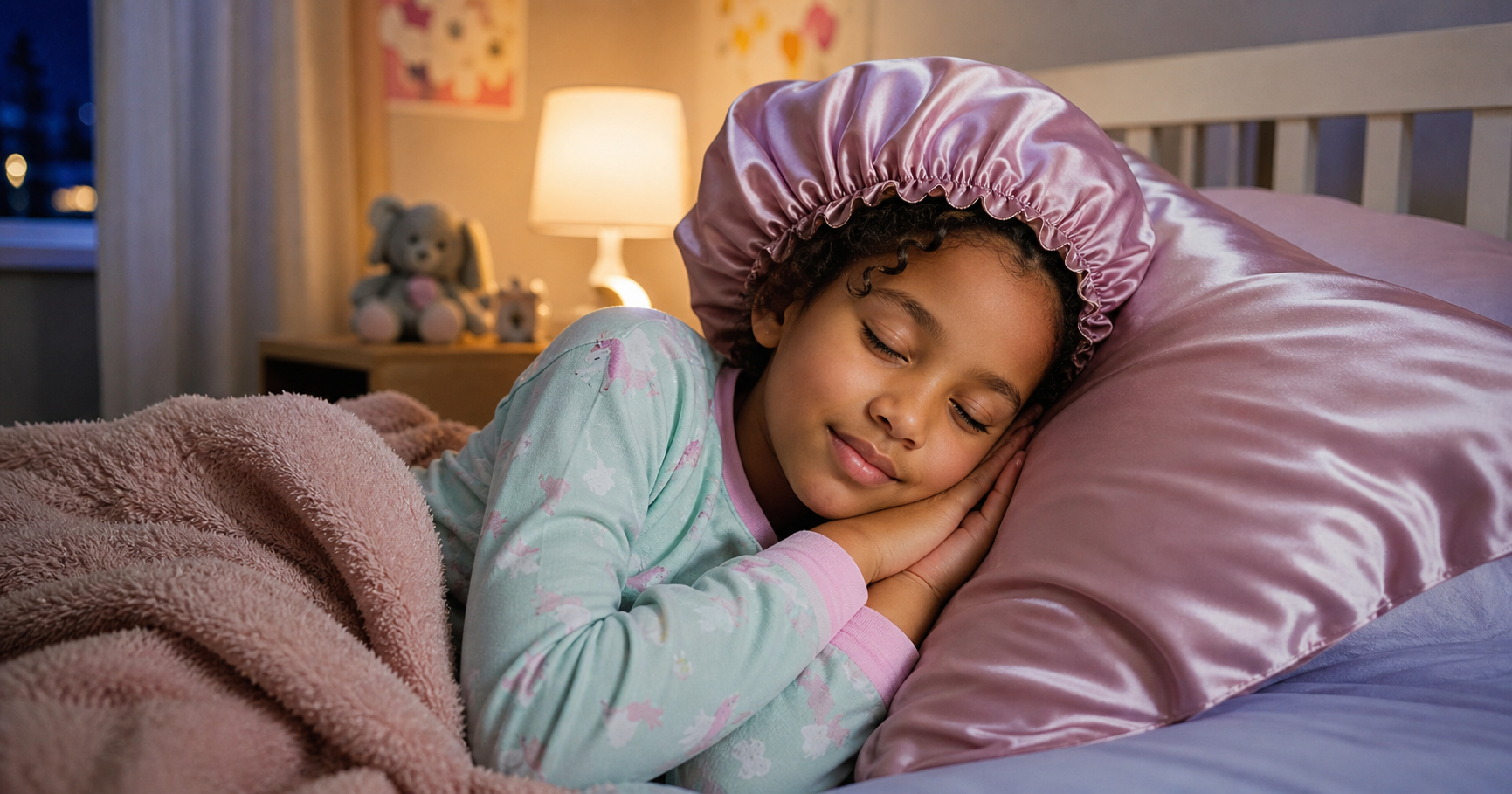

There is a small independence moment after bath that many parents recognize: your child wants to do the next step on their own.
They want to choose pajamas, climb into bed, find the book, brush their hair, or announce that they can do it by themselves. That independence is good. The problem is that wet hair does not cooperate with it.
Without a plan, wet hair drips onto pajama collars, shoulders, and backs while kids move through the rest of the evening.
Why does drying hair independently get messy?
Kids usually do not keep a towel arranged around their shoulders the way adults might.
They bend, wiggle, reach, sit, stand, and move from bathroom to bedroom. A towel slips. A shirt gets damp. Pajamas feel cold. Then the parent has to step back in, change clothes, or keep adjusting something the child thought they were doing on their own.
The issue is not the child. It is the tool.
A loose towel asks a child to stay still. A wearable towel for kids gives them a clearer job: put it on and keep moving.
What helps kids dry hair on their own?
A wearable cover helps kids dry hair on their own because it stays with them while hair air-dries.
The goal is not to make a child manage every part of hair care alone. It is to give them one simple, repeatable step after bath or wash day.
What helps:
- a predictable after-bath routine
- a cover the child can recognize as theirs
- simple language about keeping pajamas dry
- less towel adjusting from the parent
- enough coverage for hair drips
- a routine that still allows movement
The more obvious the step is, the easier it becomes: bath, pajamas, Kids Cover, bedtime.
Why does personalization matter?
Personalization helps because kids often respond to ownership.
When the cover has their name on it, it is not just a bath accessory. It becomes their cover, their step, their way to help. That small shift can make cooperation easier because the child understands what the tool is for and why it belongs to them.
You can keep the instruction simple:
"Put on your cover so your pajamas stay dry."
That is easier for a child to understand than a long explanation about wet hair, towels, and bedtime delays.
When should kids use a wearable hair cover?

Use a wearable hair cover whenever wet hair is about to land on dry clothes.
Common moments include:
- after bath
- after hair washing
- after-swim
- before pajamas
- before story time
- while curls air-dry
- while getting ready for bed
It is especially useful for long, thick, curly, wavy, or coily hair that needs more drying time.
Where does Monii fit?
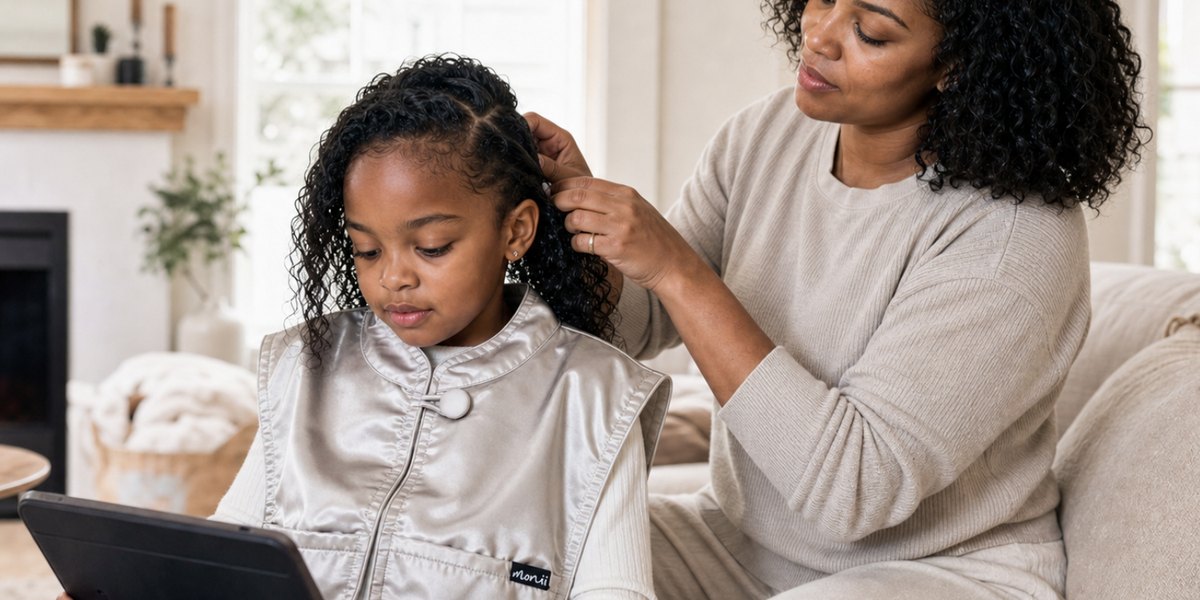
The Monii Kids Cover is made for kids to wear after bath, wash day, or after-swim while hair air-dries.
It works like a wearable towel for kids, a kids hair towel wrap, or a towel cape for wet hair. The function is straightforward: help keep hair drips off pajamas and give the child a simple routine step they can help with.
The cover buttons at the neck and has open sides so kids can still move on their own. A satin outer layer, cotton inner layer, front pockets, and full-width back pocket make the step more useful, especially when longer hair needs to tuck in while it dries. Sizes cover ages 2-7 and 8-13.
Their Routine, Refined.
FAQ
How can kids dry their own hair without soaking pajamas?
After bath, gently blot the hair, put on dry pajamas, and have the child wear a Kids Cover while hair air-dries. It helps keep hair drips off clothes.
What is a wearable towel for kids?
A wearable towel for kids is a towel-style cover a child can wear after bath, hair washing, or swimming. It helps manage wet hair while the child moves through the routine.
Is a Kids Cover better than a towel over the shoulders?
A Kids Cover can be easier because it is worn by the child instead of balanced loosely around the shoulders. It stays part of the routine while the child moves.
When should my child use a Kids Cover?
Use it after bath, wash day, or after-swim when wet hair would otherwise drip onto pajamas, shirts, bedding, or car-seat straps.