
Most low porosity hair does best washed about once a week to once every 10 days. The right schedule depends on your scalp, product load, workouts, climate, and how quickly buildup appears.
Low porosity hair is not difficult hair. It just asks for a different rhythm.
Because the cuticle tends to lie flat, water and product may sit on the surface before they absorb. That can make hair slow to get wet, slow to dry, and quick to feel coated when too much product builds up between washes.
So the question is not only how often to wash low porosity hair. It is how often to reset the hair and scalp so the next wash day actually works.
For the product side of the routine, read Low Porosity Hair Products for a Better Wash Day.
Why Low Porosity Hair Needs a Different Wash Schedule
Low porosity hair often has a tighter, flatter cuticle layer. That means water and product may take longer to move into the strand.
In real life, that can look like:
- Hair that takes a while to get fully wet
- Conditioner that feels like it is sitting on top
- Styling products that work once, then stop working as well
- Hair that takes hours to air-dry
- A coated or waxy feeling after a few days
This is why low porosity hair can be prone to buildup. If creams, oils, butters, gels, or leave-ins sit near the surface, they can collect there instead of rinsing or absorbing evenly.
A regular wash schedule helps clear that layer before the routine gets heavy.
Signs You May Be Washing Too Often
Low porosity hair does not usually need to be washed every day. Washing too often can leave the routine feeling stripped instead of refreshed, especially if you use strong cleansers or clarify too frequently.
You may be washing too often if your hair or scalp feels:
- Dry soon after wash day
- Frizzy even when you use enough water and product
- Rough or less flexible
- Tight, irritated, or uncomfortable at the scalp
- Harder to style because it feels too clean or too dry
If this sounds familiar, try stretching the time between full washes by a few days. You can still refresh with water, re-wet specific sections, or use a light leave-in where the hair actually needs it.
Signs You May Not Be Washing Often Enough
The opposite problem is buildup.
Low porosity hair may need cleansing sooner when product starts collecting on the strand or scalp. This can happen faster if you use heavy creams, oils, butters, gels, edge control, dry shampoo, or several styling layers between washes.
Signs you may not be washing often enough:
- Hair feels coated, waxy, sticky, or weighed down
- Products stop working the way they usually do
- Curls, waves, or coils look dull or less defined
- Hair feels greasy at the roots but dry at the ends
- Water beads on the hair more than usual
- Scalp feels itchy or crowded with product
When low porosity hair has buildup, adding more product usually does not solve it. A better next step is often a proper cleanse, then lighter layers after the hair is clean.
Should Low Porosity Hair Be Washed Every Day?
For most people, no. Low porosity hair usually does not need a full shampoo every day.
Daily washing may make sense if your scalp is very oily, if you sweat heavily every day, or if your work or environment leaves residue in your hair. Even then, a full wash is not the only option.
On non-wash days, you can:
- Rinse the scalp or hair with water
- Refresh curls or waves in sections
- Use a small amount of lightweight leave-in
- Keep heavy oils and creams off the roots
- Clarify only when buildup is actually present
The goal is to keep the scalp comfortable and the hair responsive without turning every day into wash day.
Is Clarifying Shampoo Good for Low Porosity Hair?
Yes, clarifying shampoo can be useful for low porosity hair because it helps remove buildup from products, oils, minerals, and residue that can sit on the surface.
Clarifying is different from regular cleansing. A regular shampoo cleans the hair and scalp for normal wash days. A clarifying shampoo gives a deeper reset when the routine starts to feel coated or unresponsive.
For many low porosity routines, clarifying about once a month is a reasonable starting point. If you use a lot of styling product, swim often, live with hard water, or notice buildup quickly, you may need it more often. If your hair feels dry or rough after clarifying, you may need it less often or need to follow with a better conditioning step.
What to Look For in a Clarifying Shampoo for Low Porosity Hair
You do not need to chase the strongest cleanser. The best clarifying shampoo for low porosity hair is the one that resets your hair enough for water, conditioner, and stylers to work again, without leaving it feeling harshly stripped.
A few things worth checking:
- Cleansing strength that matches your product load. If you use light leave-ins, a gentle clarifying wash may be enough. Heavy creams, butters, gels, and edge control usually call for something stronger.
- Something that addresses hard water, if you have it. Mineral residue can sit on low porosity hair the same way product does.
- A conditioning step to follow it with. Clarifying is a reset, not the whole routine, and low porosity hair usually wants moisture back afterward.
- How your hair feels the next day, not just in the shower. Squeaky is not the goal. Responsive is.
If you have curly, coily, or 4C low porosity hair, the same logic applies. Look for the mildest option that genuinely removes buildup, then follow it with enough moisture.
A Simple Low Porosity Hair Wash Day Routine
A low porosity hair wash day routine can stay simple.
Weekly or every 7 to 10 days:
- Wash based on your scalp and product buildup.
- Use warm water to help the hair get fully wet before shampoo.
- Cleanse the scalp thoroughly.
- Condition with enough water and slip.
- Apply styling products in lighter layers.
- Let the hair dry with less touching.
Monthly or as needed:
- Use a clarifying shampoo when hair feels coated, dull, sticky, or weighed down.
- Follow with conditioner or a deep conditioner that suits your hair.
- Reset your styling products if the routine has become too heavy.
Between washes:
- Refresh with water before adding more product.
- Avoid layering heavy creams over old product.
- Keep roots clear if your scalp gets oily quickly.
- Notice how your hair feels instead of following the calendar too strictly.
The rhythm matters more than the exact number. Once a week may be right for one person. Every 10 days may be better for another.
The Part Nobody Plans For: Drying

Low porosity hair can take a long time to dry.
That is part of what makes wash day feel bigger than the wash itself. Your hair may be clean, conditioned, styled, and still wet long after you leave the bathroom.
While it dries, water and product can sit on your neck, shoulders, and clothes. If you are air-drying curls, waves, or textured hair, you may also be trying not to touch the hair too much while it sets.
That is the part many routines skip: what you wear while wet hair finishes drying.
Read The Benefits of Air-Drying Your Hair.
Where the Monii Beauty Cover Fits
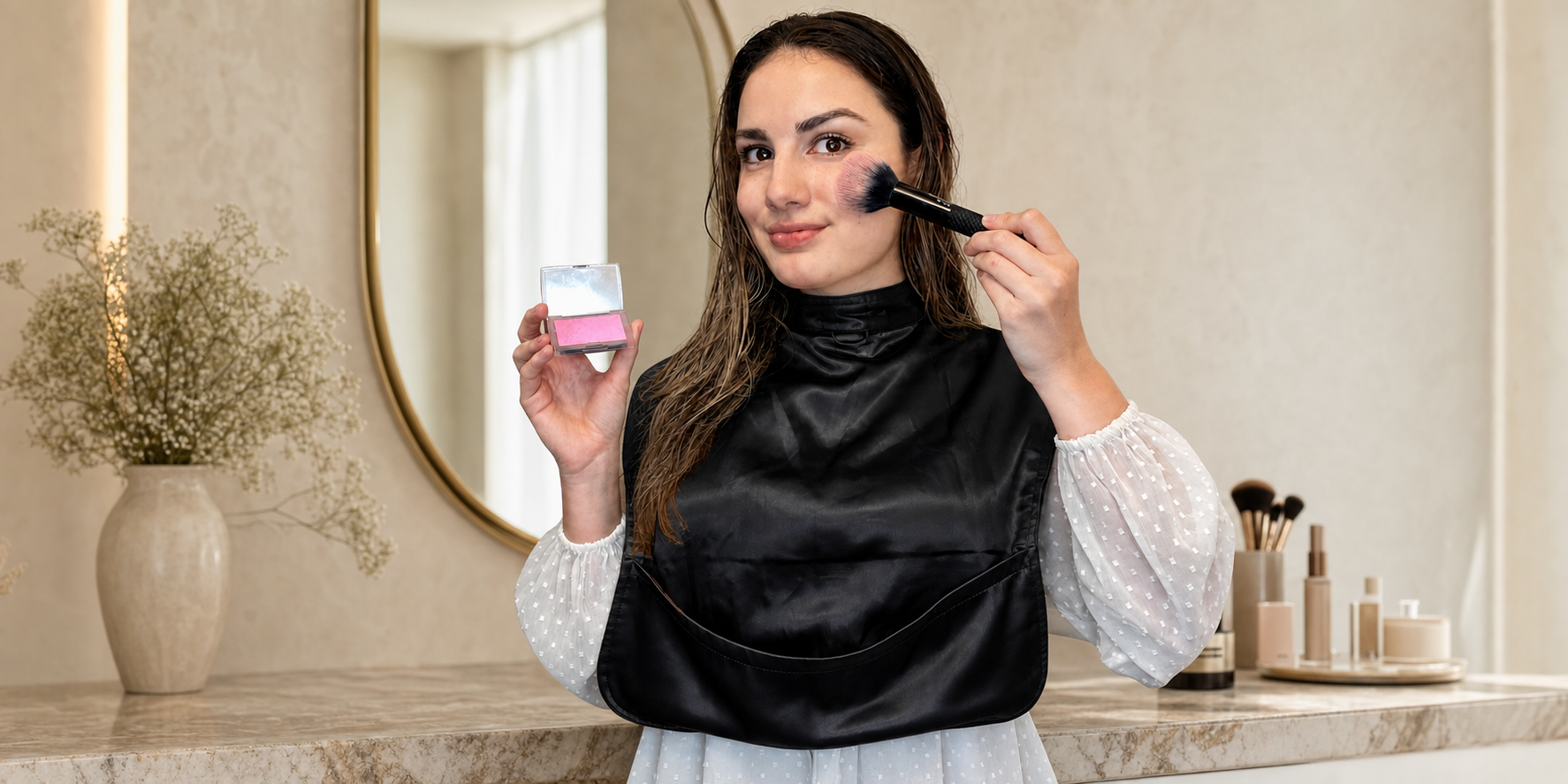
The Monii Beauty Cover is made for wet hair, air-drying, skincare, makeup, styling products, and getting ready.
It buttons at the neck and drapes from the shoulders, so it stays with you while you move through wash day. The satin outer layer is smooth near wet hair. The soft cotton inner layer helps absorb drips. The high mandarin collar helps protect the neck from wet hair, product, and makeup transfer. The open sides keep your arms free. The back pocket helps catch drips while hair air-dries.
It does not change how often you need to wash low porosity hair. It helps with the part that happens after: wet hair, slow drying, product, and clothes you would rather keep dry.
FAQ
How often should you wash low porosity hair?
Most low porosity hair does best washed about once every 7 to 10 days. The right timing depends on your scalp, styling products, workouts, climate, and how quickly buildup appears. Wash sooner if buildup shows up fast or you use heavy stylers, and stretch it longer if your hair feels dry soon after wash day.
What is the best clarifying shampoo for low porosity hair?
The best clarifying shampoo for low porosity hair is the mildest one that genuinely removes your buildup. Match the cleansing strength to how much product you use, choose something that handles hard water if you have it, and follow it with a conditioning step so the hair does not feel stripped.
Should low porosity hair be washed every day?
Low porosity hair usually should not be washed every day unless your scalp, sweat level, or environment requires it. On non-wash days, rinsing, refreshing with water, or restyling sections can be enough.
Is clarifying shampoo good for low porosity hair?
Clarifying shampoo can be good for low porosity hair because it helps remove buildup that can sit on the surface of the strand. Use it when hair feels coated, dull, weighed down, sticky, or less responsive to water and conditioner.
How do I know if I have product buildup on low porosity hair?
Common signs of product buildup on low porosity hair include a coated or waxy feeling, dullness, less definition, products not working as usual, water beading more than usual, or an itchy scalp.
How often should you use a clarifying shampoo on low porosity hair?
Many low porosity routines can start with clarifying about once a month. Use it more often if you use heavy styling products or notice buildup quickly, and less often if your hair feels dry or stripped afterward.
Why does low porosity hair take so long to dry?
Low porosity hair can take longer to dry because the cuticle tends to lie flat, so water may sit near the surface and leave the strand slowly. Hair density, styling products, and climate can also affect drying time.
Is baby shampoo good for low porosity hair?
Baby shampoo is gentle, which sounds ideal for low porosity hair, but gentle is not the same as effective. It is formulated to be mild enough for a baby's scalp, so it often will not lift the creams, oils, butters, and gels that collect near the surface of low porosity hair. Buildup can keep accumulating even though you are washing. It can work as a light cleanse between wash days, but keep a proper shampoo for wash day itself and a clarifying shampoo for the deeper reset.
Should you use a pre-shampoo treatment on low porosity hair?
A pre-shampoo treatment can help low porosity hair because it goes on dry or barely damp hair, before a flat cuticle has to compete with water. A light oil or a slippery conditioner left on for 15 to 20 minutes before you wash can loosen buildup and make detangling easier. Keep it light and keep it off the roots if your scalp gets oily quickly. The point is to prepare the hair for the wash, not to add another layer that needs removing.