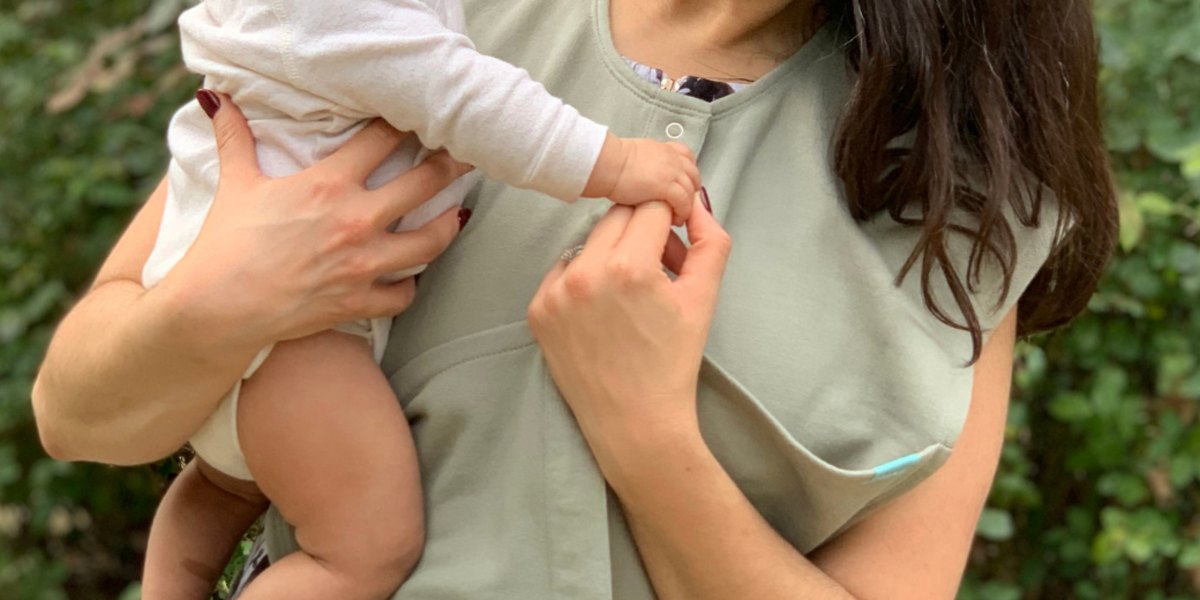

Burping is one of those early-parenting skills that sounds simple until you are holding a sleepy baby after a feed, waiting for a burp, and wondering whether you are doing it right.
The goal is practical: help release air the baby may have swallowed while feeding. Some babies burp easily. Some need a position change. Some barely burp at all. Every baby is different, and if you are worried about feeding, spit-up, reflux, weight gain, or persistent fussiness, check with your pediatrician.
This guide covers the main burping positions, gentle technique, timing, and what to do when a baby will not burp.
Why do babies need to burp?
Babies can swallow air while feeding. That swallowed air can make some babies seem gassy, cranky, uncomfortable, or more likely to spit up.
Burping helps release some of that air. It is not a cure for every fussy moment, and not every baby needs the same amount of help, but it is a useful part of many feeding routines.
Common signs a baby may need to burp:
- fussing during or after feeding
- pulling away from the breast or bottle
- arching or squirming
- seeming uncomfortable after swallowing
- spitting up with a wet burp
If the baby is feeding well and seems comfortable, you may not need to interrupt constantly. Use the baby's cues and your pediatrician's guidance.
What are the main ways to burp a baby?

The three common burping positions are over the shoulder, sitting on your lap, and belly-down across your lap.
Over the shoulder
Hold the baby upright against your chest with their chin resting near your shoulder. Support the baby's body with one hand and gently pat or rub the back with the other.
This is the classic burping position, and it is also the one most likely to put spit-up directly on your shoulder. A burp cloth or wearable burp cloth is useful here.
Sitting on your lap
Sit the baby upright on your lap. Support the chest and head carefully, with your hand supporting the chin and chest rather than pressing on the throat. Gently pat or rub the baby's back.
This position can be helpful when the over-the-shoulder method is not working or when you want more control over the baby's posture.
Belly-down across your lap
Lay the baby belly-down across your lap, supporting the head and keeping it higher than the chest. Gently pat or rub the back.
Some babies respond well to this position, but it requires steady support and attention to the baby's head and airway.
What is the best technique for burping?
Use gentle repeated patting or rubbing. A cupped hand is often gentler than a flat palm.
You do not need hard patting. Burping is about helping air move, not forcing it out. Keep the baby's body supported, move calmly, and give the position a little time before switching.
Simple technique:
- Hold the baby securely.
- Keep the head supported.
- Use gentle pats or slow back rubs.
- Try for a few minutes.
- Change position if nothing happens.
- Burp again when feeding is over.
Spit-up can happen during any of these positions, so protect your shoulder or lap before you start.
How often should you burp a baby?
Timing depends on the baby and how they feed.
Nemours KidsHealth suggests trying to burp every 2 to 3 ounces during bottle-feeding and each time the baby switches breasts during breastfeeding. Babies who are gassy, spit up often, have reflux, or seem fussy during feeding may need burping more often.
After feeding, keeping the baby upright for a short period can also help reduce milk coming back up. KidsHealth notes 10 to 15 minutes after feeding, or longer when a baby spits up or has reflux.
If your baby has reflux symptoms, repeated vomiting, poor weight gain, blood in spit-up, trouble breathing, or you feel something is not right, contact your pediatrician.
What if my baby will not burp?
If your baby will not burp after a few minutes, change position and try again.
Some babies need a little movement. Some need a break. Some do not burp every time, especially as they get older and swallow less air while feeding.
Try:
- switching from shoulder to lap
- sitting baby upright for a few minutes
- using slow back rubs instead of pats
- pausing and trying again after a short break
- burping again at the end of the feed
If the baby is comfortable, feeding well, and not showing signs of distress, a missed burp is not always a problem. If the baby seems consistently uncomfortable, very fussy, or is spitting up in a way that worries you, ask your pediatrician.
Where does Monii fit?
The Monii Wearable Burp Cover helps with the mess part of burping, not the medical part.
It is a wearable burp cloth that stays on your shoulder hands-free while you feed, nurse, burp, and hold the baby. Instead of trying to keep a loose cloth from sliding while you support the baby, the cover is already on and ready to catch spit-up or a wet burp.
In the early days, that matters. You are tired, the baby is small, and the routine repeats all day and through the night.
Wear. Nurse. Burp. Repeat.
Shop the Monii Wearable Burp Cover
FAQ
What is the best position to burp a baby?
Common burping positions include over the shoulder, sitting on your lap, and belly-down across your lap. The best position is the one that is comfortable, secure, and effective for your baby.
How often should I burp a baby?
Many parents try burping every 2 to 3 ounces during bottle-feeding or when switching breasts during breastfeeding, then again after feeding. Some babies need more or less depending on gas, spit-up, reflux, and comfort.
What should I do if my baby will not burp?
If your baby will not burp after a few minutes, change position and try again. If the baby seems comfortable, a missed burp is not always a problem. If you are worried about fussiness, spit-up, reflux, or feeding, check with your pediatrician.
Can a wearable burp cloth help with burping?
A wearable burp cloth does not make the baby burp, but it helps keep your shoulder and clothes covered hands-free while you feed, burp, and hold the baby.