
Kids' curly hair wash day works best when the routine is clear, gentle, and not rushed.
Curly hair often needs more water, more conditioner, more patience, and less brushing than adults may expect. For kids, the routine also has to feel tolerable. If every step feels like pulling, waiting, or being corrected, wash day becomes something to fight before it even begins.
A calmer routine does not mean a complicated routine. It means doing the steps in the right order and making space for the part that comes after the shower: wet curls, dry pajamas, and enough time for hair to air-dry.
What is a good kids curly hair wash-day routine?
A good kids curly hair wash-day routine starts with water and ends with hair being left alone long enough to dry.
Try this order:
- Wet the hair thoroughly.
- Cleanse the scalp.
- Condition generously.
- Detangle with slip, starting at the ends.
- Rinse or leave in product based on the product directions.
- Style while the hair is still wet.
- Let curls air-dry with less touching.
- Keep wet curls off pajamas while they dry.
The American Academy of Dermatology advises choosing products based on hair type, focusing shampoo on the scalp, using conditioner after washing, and being gentle with wet hair. Those basics matter even more for curly kids because curls can tangle, dry unevenly, and lose shape when handled too much.
How do you detangle kids' curly hair without the struggle?
Detangling is usually the step that decides how the rest of wash day feels.
Start with wet hair and enough conditioner or detangler for slip. Work in sections if the hair is dense. Begin at the ends, where tangles are usually worst, and slowly move upward toward the roots. A wide-tooth comb or fingers can be gentler than a brush on wet curls.
Keep the pace slow enough that your child can trust what is happening. If you hit a knot, add more water or conditioner before trying again. Pulling through it may save a few seconds, but it teaches the child to brace for pain the next time.
A simple detangling block:
- Wet hair first.
- Add conditioner or detangler.
- Work in small sections.
- Start at the ends.
- Hold the section near the root to reduce pulling.
- Pause when your child needs a break.
Should kids' curly hair be styled wet?
Curly kids' hair usually responds best when styling products are applied while the hair is still wet or very damp.
Water helps curls group together. It also helps leave-in conditioner, cream, gel, or mousse spread more evenly. If hair starts drying before the product is in, add water before adding more product.
After styling, try to touch the curls less. The more you separate curls while they dry, the more frizz can show up. Air-drying gives the curl pattern time to settle, but it also creates the practical problem parents know well: wet curls drip onto pajamas, shoulders, and bedding.
How do you keep pajamas dry while curly hair air-dries?

This is the step most curly wash-day routines forget.
Your child can do every hair step well and still end up with damp pajamas ten minutes later. Wet curls sit on the shoulders, drip down the back, and make bedtime feel colder and less comfortable than it needs to be.
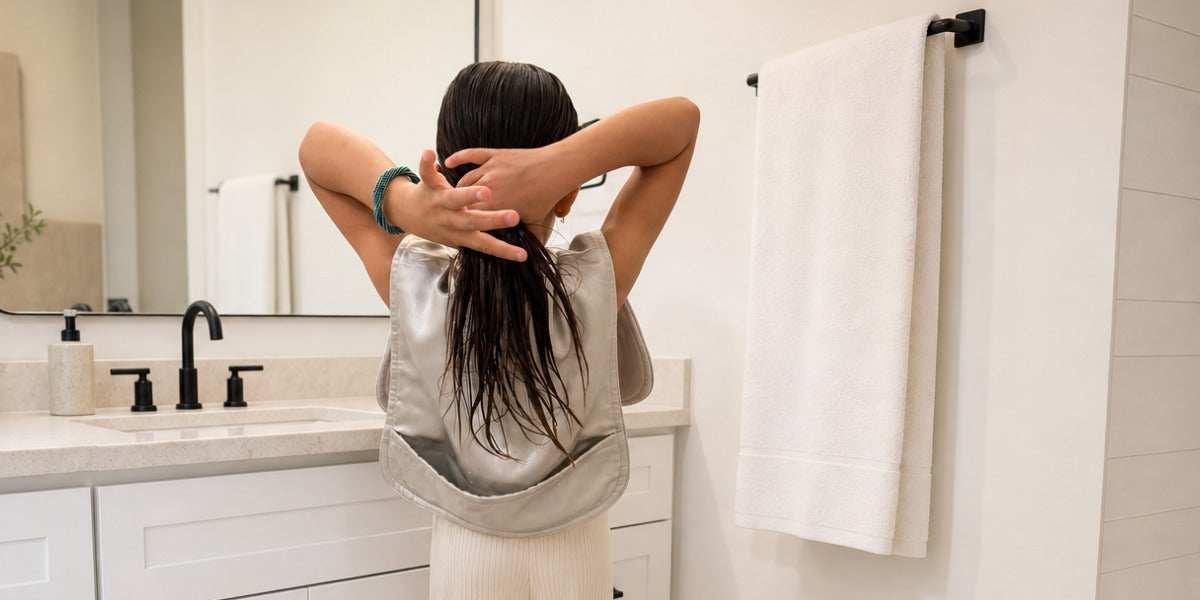
The fix is not to rough-dry curls into a towel or keep changing clothes. A wearable kids cover can sit over pajamas while hair air-dries, helping keep hair drips off clothes without forcing curls into a tight wrap.
For curly kids, that matters. The goal is to let the hair dry in its shape while keeping the child comfortable enough to keep the routine going.
What about nighttime protection?
Once curls are dry or mostly dry, nighttime protection can help the style last longer.
Depending on your child's hair and comfort, that might mean a satin pillowcase, loose pineapple, bonnet, scarf, or simple low-friction sleep setup. The best option is the one your child will actually tolerate. If a bonnet comes off every night, a satin pillowcase may be the calmer place to start.
Nighttime protection is not about making kids' hair precious. It is about reducing tangles, friction, and morning frustration.
Where does Monii fit?
The Monii Kids Cover supports the air-drying step after kids' curly hair wash day.
It helps keep wet curls, water, and product off pajamas while hair dries. It works like a kids hair towel wrap or towel cape, but it is worn by the child and made for the routine after bath, wash day, or after-swim.
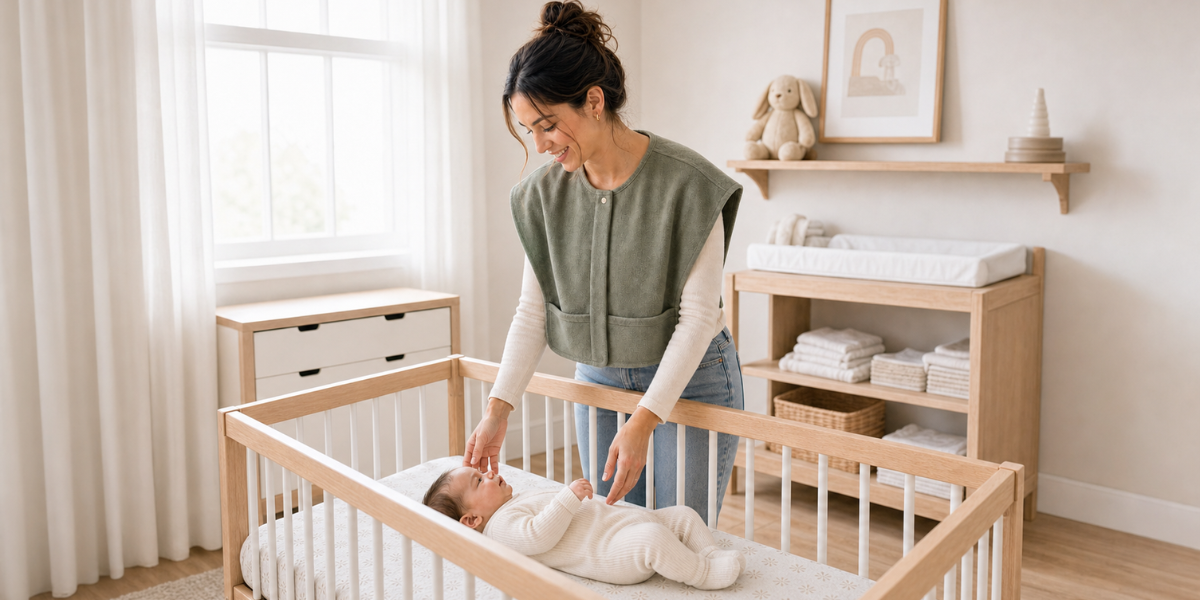
The satin outer layer is smooth near curls, while the cotton inner layer helps absorb drips. Buttons at the neck keep it in place, open sides let kids move, front pockets hold small routine items, and the full-width back pocket gives longer hair a place to tuck in while it air-dries. Sizes cover ages 2-7 and 8-13.
For parents, it solves the soaked-pajama problem. For kids, especially when personalized, it can become their own part of the routine.
Their Routine, Refined.
FAQ
What is the best routine for kids' curly hair?
A simple kids curly hair routine is to wet thoroughly, cleanse the scalp, condition generously, detangle with slip from ends upward, style while wet, and let hair air-dry with less touching.
How do I detangle my child's curly hair?
Detangle curly kids' hair when it is wet and slippery with conditioner or detangler. Work in sections, start at the ends, use fingers or a wide-tooth comb, and pause before pulling through knots.
Should kids' curly hair air-dry?
Air-drying can work well for kids' curly hair because it gives curls time to settle without repeated heat or brushing. Keep wet curls off pajamas while they dry so the child stays comfortable.
How do I keep my child's pajamas dry after curly wash day?
Use a wearable Kids Cover over pajamas while curls air-dry. It helps keep wet hair drips and product off clothes without wrapping curls tightly in a towel.