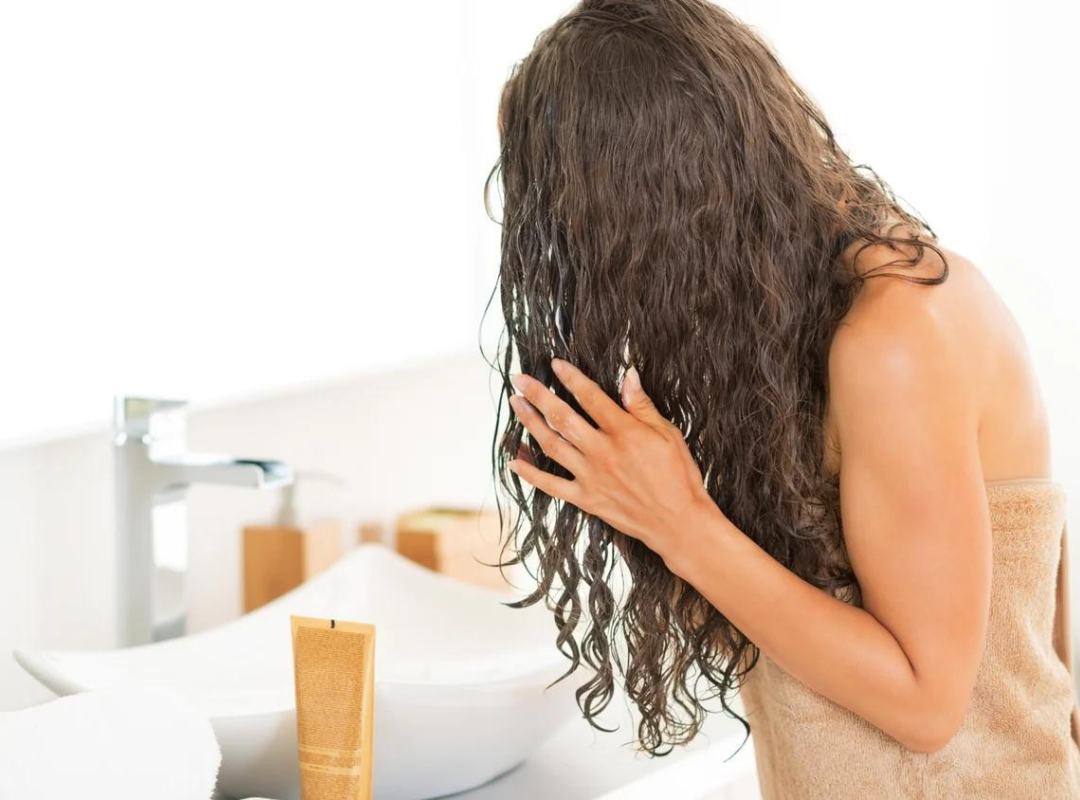

Satin became a hair-care favorite for a simple reason: friction matters.
Hair does not only respond to shampoo, conditioner, and styling products. It also responds to what touches it throughout the day and night, from pillowcases and towels to shirt collars and the fabric sitting against wet ends after a shower.
Cotton pillowcases, rough towels, and repeated rubbing can disturb the cuticle, pull at curls, absorb moisture, and make frizz easier to trigger. Satin helps because it is smooth, allowing hair to glide with less drag so your routine has a better chance of lasting.
This guide covers the benefits of satin for hair, how satin compares with cotton and silk, where satin belongs in a routine, and why Monii uses satin on the outside of the Wearable Beauty Cover.
Is satin good for your hair?
Yes, satin can be good for hair because it creates a smoother surface with less friction than many everyday fabrics.
Quick answer:
- Satin can help reduce friction.
- Less friction can mean less frizz.
- Satin can help protect curls, waves, and textured hair from rough rubbing.
- It can help styles last longer overnight.
- It is useful for pillowcases, bonnets, scrunchies, and wet-hair routines.
Satin is especially helpful for hair that tangles easily, frizzes quickly, loses definition overnight, or feels sensitive to rough towels and cotton fabric.
It is not a treatment in the way a conditioner is, and it does not moisturize hair by itself. What it can do is help protect the moisture, shape, and softness your routine already created.
Satin vs cotton: what is the difference for hair?
The main difference between satin and cotton is surface feel and friction.
Cotton is absorbent and textured, which makes it useful in plenty of places, but it can be rougher on hair. It can absorb oils and moisture from the strand and create drag when hair rubs against it.
Satin is smoother. The weave creates a surface that hair can glide across more easily, and that lower-friction feel can help reduce disruption to the cuticle, curls, waves, and finished styles.
This is why people often switch to satin pillowcases, satin bonnets, or satin scrunchies. The goal is not luxury for its own sake; the goal is less friction in the places where hair spends the most time rubbing, resting, or drying.
For wet hair, the cotton question is a little different. You still need absorbency somewhere in the routine, especially after a wash. The trick is using absorbency without turning the whole routine into rough rubbing, tight towel twisting, or damp clothes.
Does satin really reduce frizz and breakage?
Satin can help reduce frizz and breakage by reducing friction.
Frizz often happens when the hair's outer layer is disturbed, when curls separate before they set, or when dryness and friction work together. Breakage can come from rough detangling, tight styles, heat, dryness, or repeated rubbing against rough surfaces.
Satin does not fix every cause of frizz or breakage, and it should not be treated like a magic product. But it can remove one common source of stress: drag.
Satin may help if:
- Your curls lose shape while you sleep.
- Your hair feels rough after rubbing against towels or collars.
- You wake up with tangles around the nape.
- Your ends feel fragile.
- Your hair frizzes while drying because it keeps touching your shirt.
For curly, textured, color-treated, long, or fragile hair, reducing friction is one of the easiest protective habits to build.
Satin vs silk: which is better for hair?
Satin and silk are often compared, but they are not the same kind of word.
Silk is a fiber. Satin is a weave. That means satin can be made from different fibers, while silk refers to the material itself.
Both can be smooth and gentle for hair when the surface is well made. Silk is often breathable and naturally luxurious, while satin can give a similar low-friction feel and is often easier to care for and more accessible.
The best choice depends on the product, the fabric quality, how you use it, and how it holds up in your routine. For hair care, the most practical question is this: does the surface reduce friction, feel smooth against hair, and fit the moment you are using it for?
Where should you use satin in your routine?
Satin belongs anywhere hair regularly rubs, rests, or needs to keep its shape.
Common satin hair-care tools include:
- Satin pillowcase: Helps reduce overnight friction.
- Satin bonnet: Helps protect curls, coils, and styles while sleeping.
- Satin scrunchie: Holds hair with less roughness than many traditional elastics.
- Satin-lined hat: Helps reduce friction when wearing winter hats or casual caps.
- Wearable satin cover: Helps protect wet-hair routines while hair air-dries.
The wet-hair piece is often overlooked. After a wash, hair is fragile and still setting; a towel turban can be useful for some routines, but it can also compress curls, stretch the roots, or pull hair into a shape you do not want.
Letting wet hair sit directly on a shirt creates a different problem: damp clothes, product transfer, and more friction while hair dries. That is why a wearable satin cover or towel cape for wet hair makes sense. Hair can hang and air-dry while your shoulders and clothes stay covered.
Where does Monii fit into satin hair care?
The Monii Wearable Beauty Cover brings satin into the part of the routine where wet hair usually causes the most mess.
The Beauty Cover has a satin outer layer and cotton inner layer. The satin outer creates a smooth surface near hair, while the cotton inner helps absorb drips and runoff. Together, they support the real wash-day moment: hair is wet, products are setting, and you still need to dry off, apply lotion, get dressed, do skincare, finish makeup, or move through the house.
It works like a reusable beauty cape, shoulder towel, or towel cape for wet hair, but with a more intentional design. It drapes from the shoulders, buttons at a high mandarin collar that keeps water, color, and product off your neck, includes a full-width back pocket for drips, and has front pockets for clips, brushes, and small tools.
Satin helps reduce friction. Cotton helps manage moisture. Monii puts both where the routine actually needs them.
Wet hair. Dry clothes. Both at once.
Frequently asked questions
Is satin or silk better for hair?
Both satin and silk can be good for hair when they create a smooth, low-friction surface. Silk is a fiber, while satin is a weave. The better choice depends on the product quality, feel, care needs, and how you use it in your routine.
Does satin help with frizz?
Satin can help with frizz by reducing friction. It gives hair a smoother surface to rest against, which can help protect curls, waves, and fragile ends from rough rubbing.
Is sleeping on satin good for your hair?
Sleeping on satin can be good for hair because a satin pillowcase or bonnet may reduce overnight friction, tangles, frizz, and style disruption.
Can satin help wet hair?
Satin can help wet hair by creating a smoother surface with less drag. For wet-hair routines, Monii pairs a satin outer layer with a cotton inner layer so hair has a smoother surface nearby while drips are absorbed.
Is satin better than cotton for hair?
Satin is usually gentler than cotton for reducing friction. Cotton is more absorbent, which can be useful, but it can also create drag and absorb moisture from the hair. Many routines use satin for smoothness and cotton where absorbency is needed.